Pathways of Light FAQ: Maximizing Sunlight, Pattern Coverage, and Walkway Lantern Layouts
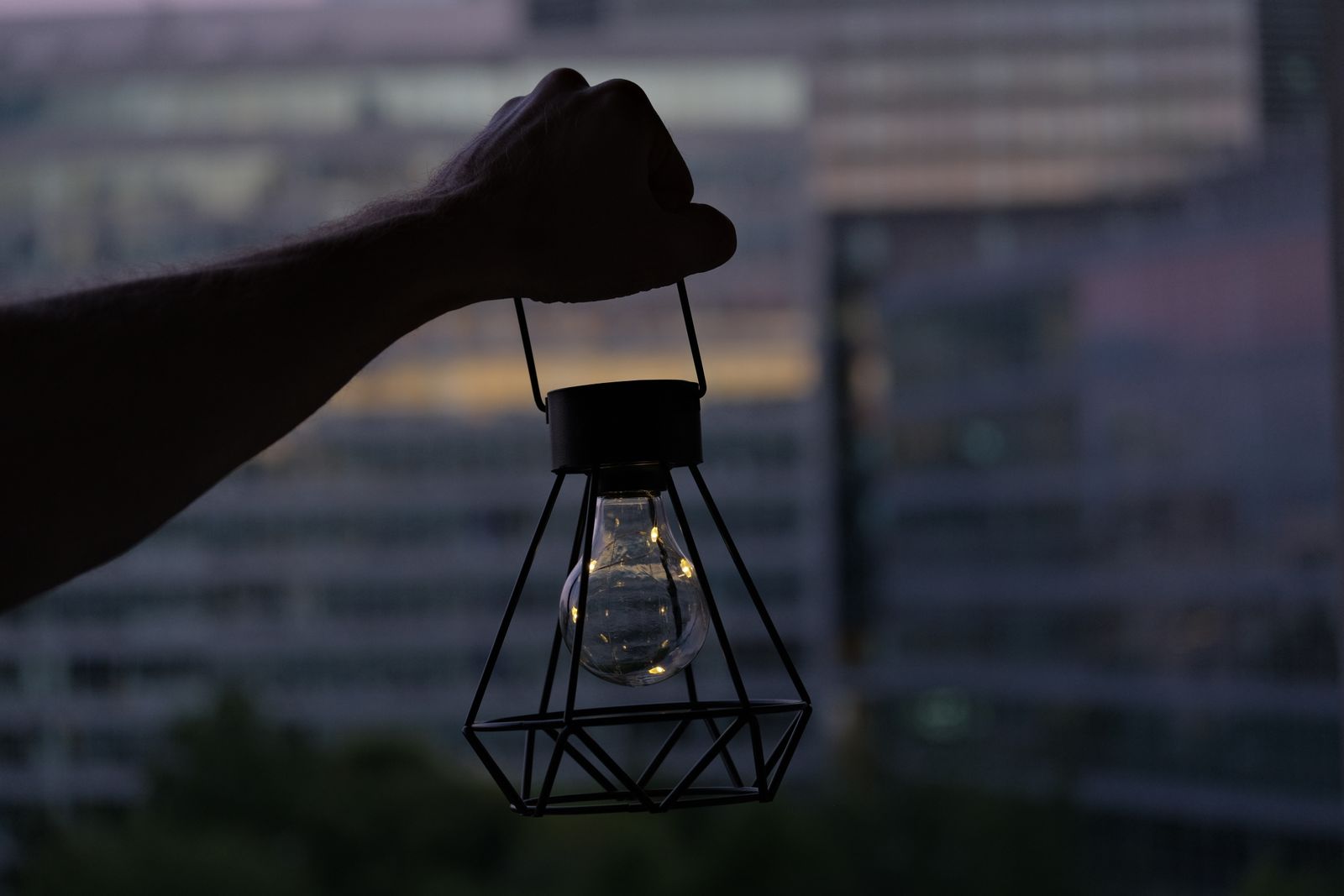
Pathway solar lantern placement is three questions: does the 0.2W panel see 8–10 hours of sky, do 10-lumen pools follow the walker's rhythm, and do reflective patterns land on stone and plants instead of bedroom glass. Auto on/off handles dusk. A metal water-drop lantern at 20.5 cm × 15.5 cm lines a walk from a hook or a pad beside the paving, not from the middle of the stride.
Sunlight is the first pathway question
A walk that looks even on a plan is rarely even in sun. House walls, hedges, and trees break the 0.2W harvest. The 600 mAh cell can support about 10–12 hours of decorative light only after a real solar day. Stations in permanent shade fail that FAQ before layout begins.
Aim each panel near 30–45 degrees at open sky. Wipe pollen and grit so IP65 sealing is not asked to charge through a film of dust. Charge between 0°C and 45°C. A pretty winter path still has to obey that window.
If only one side of the walk sees sky, that is the lantern side. Do not add a matching row in the hedge shadow to make the drawing look balanced. The shorter sustainable path guide is the eco framing around this FAQ.
Pattern coverage is a surface problem
Photo by Took A Snap on Pexels
Reflective patterns need something to hit. On a walk, that is usually paving, edging stone, and the first plants. A lantern against a blank dark hedge throws less lace. A lantern against a white wall facing a window throws too much.
Ten lumens is a small source. Coverage is not a photometric grid. It is whether the next pool is visible and whether the flicker reads as a jewel instead of a glare. Rotate the teardrop so the richest pattern falls on the path, not into eyes at the front door.
Hanging slightly above the walk widens the pool. Sitting on a pad tightens it. Use hang points where the hook does not snag shoulders, and sit points that stay off the stride. Hardware steps live in how to install solar walkway lighting step by step.
Walkway layouts that answer the usual mistakes
Narrow path: one sunlit side, pools that almost meet, no dual row. Wide allée: stagger both sides. Curve: put the next jewel on the outside of the bend so the walker sees it before the turn. Gate: one unmistakable marker, not a cluster that blinds the latch hand.
Pack size is the sunlit count. Extra lanterns stuffed into dark corners do not fix a dark stretch. A different fixture class, or accepting dusk in that stretch, is more honest than a row of empty 600 mAh cells.
Waterproofing and battery questions that sit under every layout are collected in solar pathway lighting FAQs on waterproofing, battery life, and placement.
What a pathway lantern is not
It is not a 10-lumen excuse to skip a handrail, not a security flood, and not a flowerbed centerpiece shoved onto the paving. It is not a unit to step on. Keep metal teardrops beside the walk. Auto on/off should not be fought with a porch flood aimed down the same path; if the sensor thinks it is day, the walk stays dark.
Pathway FAQs versus the short answer
| Question | Short answer | Detail to check | | --- | --- | --- | | Which side of the path | The sunlit side | 8–10 hours of sky at 30–45 degrees | | How far apart | Where the last 10-lumen pool fades | Stride plus pattern on stone | | Hang or sit | Hang to widen; sit to mark an edge | Hook off the shoulder line | | Both sides | Only on a wide walk, staggered | Avoid mirrored glare gates | | Pack size | Sunlit stations only | Do not fill shade with extras |
Pathway solar lantern FAQ checklist
- [ ] Confirm each station has a real solar day.
- [ ] Aim patterns at paving and plants, not bedroom glass.
- [ ] Space as a walking rhythm of 10-lumen pools.
- [ ] Use one side on a narrow walk; stagger a wide one.
- [ ] Keep lanterns off the walking surface.
- [ ] Buy a pack to the sunlit count.
Frequently asked questions
How do I maximize sunlight on a walkway lantern?
Put the 0.2W panel on the open-sky side at 30–45 degrees, wipe it clean, and skip stations in hedge or eave shade. Charge in the 0°C to 45°C window.
How do I get more pattern on the path?
Sit or hang the teardrop so reflective patterns hit stone and nearby leaves. Rotate the body. Do not expect 10 lumens to paint a tall blank wall evenly.
Should lanterns go on both sides of the walk?
Only if the walk is wide and both sides see sun. Stagger the beats. A narrow path wants one side.
Can I hang lanterns over the center of the path?
Only if head clearance is honest and the hook is sturdy. Most gardens do better with a side hang or a pad beside the paving.
Why did a perfectly even row die at the north fence?
Even layout ignored sun. The 600 mAh cells in shade never filled. Pull those units to sunlit stations.
Is IP65 enough for a path that puddles?
IP65 is rain and jets. Raise the lantern onto a pad or hook so it is not standing in the puddle.
Related reading
Sustainable path design, walkway install steps, and waterproofing FAQs sit next to this layout FAQ.
- how to light a garden path sustainably
- how to install solar walkway lighting step by step
- pathway lighting FAQs on waterproofing, battery, and placement
- solar water drop lantern sustainable path decor review
What to do next
Walk the path at noon and at dusk with the three questions in mind: sky, rhythm, and where the pattern lands. Move any lantern that fails sun or sits in the stride, and buy only as many teardrops as there are honest stations.