Pattern Light Outdoor Lanterns Placement: Projection & Height Guide
Follow the 3:1 projection rule: elevate patterned solar lanterns 24 to 36 inches above a smooth, pale surface (such as light flagstone or painted wood) to cast a crisp 3- to 5-foot shadow mandala. Maintain at least 6 to 8 feet between neighboring lanterns to prevent pattern overlap, and keep fixtures at least 8 feet away from 800+ lumen ambient porch lights.
Essential Placement Principles at a Glance
- 24–36 Inches Hanging Elevation: Achieves the optimal balance between shadow pattern spread (3–5 ft diameter) and crisp edge definition.
- 60%+ Surface Reflectivity Canvas: Pale stone, gravel, or painted wood yields up to 40% higher visual contrast than dark mulch or lawn.
- 6–8 Feet Lateral Spacing: Prevents light cone overlap and maintains distinct, sharp filigree shadow borders between fixtures.
- 8+ Feet Ambient Light Distance: Protects delicate 15–30 lumen flickering LED patterns from being washed out by bright security or porch lighting.
- 8–10 Hours Unshaded Sun Arc: Guarantees top-mounted solar panels capture full photovoltaic charge for 10–12 hours of evening illumination.
Technical Placement Specifications by Mounting Method
Photo by 🇻🇳🇻🇳Nguyễn Tiến Thịnh 🇻🇳🇻🇳 on Pexels
| Mounting Style | Ideal Elevation (in) | Shadow Radius (ft) | Surface Contrast Need | Solar Exposure Arc |
| --- | --- | --- | --- | --- |
| Shepherd Hook | 24 – 36 in | 3.0 – 5.0 ft | High (Light Stone / Gravel) | 6 – 8 hrs Direct Sun |
| Tree Branch Canopy | 30 – 42 in | 4.0 – 6.0 ft | Moderate to High | 6+ hrs Unshaded Sun |
| Patio Tabletop | 0 – 12 in | 1.5 – 2.5 ft | High (Pale Wood / Marble) | 6 – 8 hrs Direct Sun |
| Pathway Stake | 18 – 24 in | 2.0 – 3.5 ft | High (Light Pavers / Concrete) | 8+ hrs Full Sun |
Review exact mounting heights, projected shadow radii, and lighting requirements across standard outdoor setup scenarios.
Visualizing Light & Shadow Arc Geometry
Understanding how elevation height alters pattern radius and light intensity allows you to fine-tune your garden display.
Pro Tip: The Dual-Surface Contrast Trick
To achieve fairy-tale crispness over dark garden beds, lay a 2-foot ring of pale pea gravel or crushed white quartz beneath your shepherd hook. This creates an optical reflector with over 75% surface light yield, transforming what would be absorbed light on dark mulch into a brilliant, glowing mandala of filigree patterns.
Selecting Your Shadow Canvas Surface
To achieve razor-sharp shadow projection, suspend patterned lanterns 24 to 36 inches above matte, pale ground surfaces, keeping them at least 8 feet away from high-lumen porch lighting.
Best choice for
- Light-colored flagstone or smooth pale concrete at 30 inches elevation — Reflects fine filigree shadows with crisp edge definition without light absorption.
- Shepherd hooks spaced 6 to 8 feet apart at 24 inches elevation along gravel paths — Prevents pattern overlap while casting overlapping warm golden pools across the walkway.
- Placing directly on tall dark grass or damp mulch, which absorbs up to 80% of projected light.
- Positioning within 6 to 8 feet of 800+ lumen floodlights or automated porch lights that drown out 15-30 lumen warm LED glows.
- Tabletop Placement on Light Marble or Painted Wood — Ideal if tree branches or shepherd hooks are unavailable; produces an intimate 2.5-foot radial mandala.
Featured Craftsmanship: The Solar Water Drop Lantern
Engineered specifically for storybook ambiance and high-contrast shadow artwork, this teardrop lantern combines artistic filigree cutouts with rugged outdoor performance.
Creating an enchanted evening garden is both a creative joy and an optical science. When light travels through the laser-cut metal filigree of a solar teardrop lantern, its clarity at the ground level is governed by the inverse-square law of illumination. As elevation height increases, light rays spread wider, enlarging the projected pattern but reducing contrast density.
Height-to-Radius Ratios
At a low hanging height of 12 to 18 inches, light rays travel a shorter distance, casting a tight 2- to 2.5-foot shadow mandala with dense, high-contrast dark lines. Elevating the lantern to 24 to 36 inches expands the projection footprint to 3.5 to 5 feet, creating a sweeping tapestry of warm golden light without losing sharp pattern definition. Pushing height beyond 48 inches, however, causes excessive ray divergence, softening intricate filigree details into faint, hazy blurs.``` [ Solar Panel ] <-- Unshaded 8-10 Hr Sun Arc | [Water Drop] / | \ / 3:1 \ <-- 24" to 36" Height Elevation / Projection \ / Angle \ ------------------- <-- 60%+ Reflective Canvas (Flagstone / Quartz) |<- 3.5' - 5.0' ->| ```
Canvas Reflectivity (Albedo Impact)
The ground material acts as the projection canvas. Light stone, pale pavers, and quartz gravel possess a high reflectivity index (60% to 85%), bouncing light back into the viewer's eye and accentuating filigree shadows. Conversely, dark wood, moist pine bark mulch, and dense turf absorb 70% to 85% of emitted lumens, muffling pattern contrast. To display subtle flickering candle effects on darker surfaces, lower the lantern height to 18 to 20 inches or place a decorative light stone plate underneath.Solar Charging Photovoltaic Angles
To maintain 10 to 12 hours of evening glow, the top-mounted solar collector must receive 8 to 10 hours of direct, unshaded sunlight daily. Avoid placing lanterns under heavy evergreen canopies or directly beneath roof overhangs that cast permanent midday shadows. The built-in photocell sensor automatically activates light output at dusk (typically when ambient light drops below 10 lux) and switches off at dawn.Ground Surface Projection Matrix
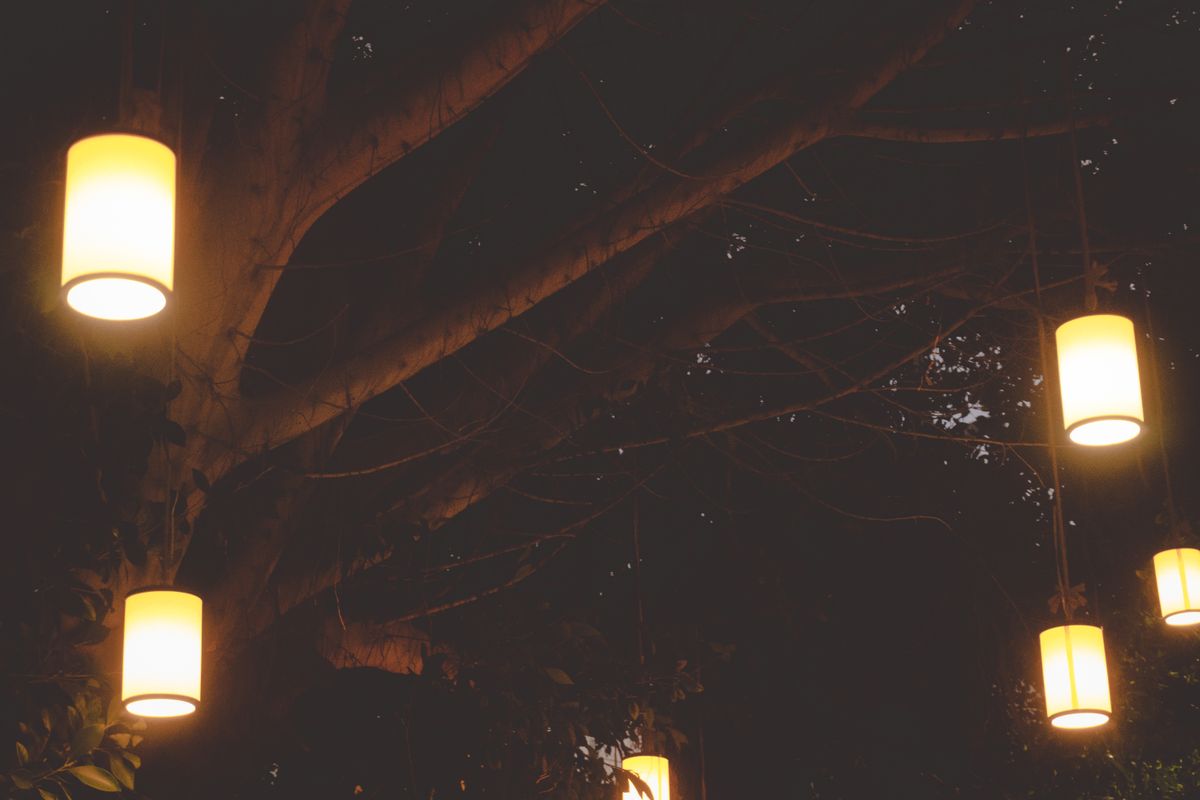
Photo by Mehmet Kaya on Pexels
| Ground Surface Scenario | Reflectivity Index | Pattern Edge Crispness | Distortion Level | Recommended Elevation |
| --- | --- | --- | --- | --- |
| Scenario A: Pale Flagstone / Light Concrete Pavers | 70% – 85% | Razor-Sharp (10/10) | Very Low (<5%) | 24 – 36 in |
| Scenario B: Smooth Stained Deck / Painted Wood | 50% – 65% | Crisp & Warm (8/10) | Low (<10%) | 20 – 30 in |
| Scenario C: Fine White Quartz or Light Pea Gravel | 65% – 80% | Softly Textured (8/10) | Moderate (15%) | 24 – 36 in |
| Scenario D: Dark Shredded Bark Mulch | 15% – 25% | Faint & Muddy (3/10) | High (>40%) | 12 – 18 in |
| Scenario E: Tall Turf Grass / St. Augustine Lawn | 20% – 30% | Fragmented (4/10) | Severe (>60%) | 18 – 24 in |
Compare visual contrast, edge clarity, and recommended mounting elevations across common patio and garden surfaces.
5 Placement Mistakes That Wash Out Your Shadow Patterns
Avoid these common setup errors to preserve vibrant, romantic lighting in your outdoor sanctuary:
Expand Your Garden Sanctuary
Explore additional expert manuals on aesthetic outdoor lighting setups and solar lantern maintenance:
- Tabletop Glow or Canopy Dreams? A Placement Guide for Patterned Solar Lanterns
- Maximizing Shadow Artistry: How to Fix Dim Patterns and Poor Sunlight Exposure for Solar Lanterns
- Atmospheric Garden Styling & Aesthetic Outdoor Lighting Manual
Frequently Asked Questions About Lantern Placement
Find answers to essential layout, lighting competition, and surface alignment questions.
Your Step-by-Step Styling Blueprint
Your decision: Determine your primary garden canvas (light stone patio vs dark mulch walkway) and select appropriate shepherd hooks or tree branch mounts.
Do this next: Conduct a 5-minute twilight trial by holding your lantern at 24 and 36 inches above your surface to mark the optimal hook location before installing.
- Read next: Tabletop Glow or Canopy Dreams? A Placement Guide for Patterned Solar Lanterns
- Read next: Maximizing Shadow Artistry: How to Fix Dim Patterns and Poor Sunlight Exposure for Solar Lanterns
Bring fairy-tale magic to your outdoor space with the Solar Water Drop Lantern, featuring an IP65 waterproof metal teardrop frame and high-contrast reflective filigree patterns.
Begin crafting your magical evening sanctuary with these simple setup steps.
Cover photo by 🇻🇳🇻🇳Nguyễn Tiến Thịnh 🇻🇳🇻🇳 on Pexels.