Solar Lantern Battery Life & Weatherproofing Guide (IP65 Care)
A simple 30-day cleaning rule paired with 8 hours of direct sunlight ensures IP65 solar lanterns maintain 10–12 hours of nightly runtime. Wipe photovoltaic panels monthly with a damp microfiber cloth, re-grease silicone seals annually, and store batteries indoors when winter temperatures plummet below 14°F (-10°C).
Key Care Practices for Year-Round Radiance
Maintaining the enchanted glow of your solar teardrop lanterns requires a blend of gentle routine care and seasonal awareness:
- 30-Day Cleaning Cadence: Dust, pollen, and tree sap degrade photovoltaic absorption by up to 35%. A quick wipe restores full 8-to-10-hour charging efficiency.
- 500-Cycle Cell Boundary: The internal 1.2V AA NiMH rechargeable cell typically delivers 500 charge-discharge cycles (roughly 1.5 to 2 years) before requiring replacement.
- IP65 Ingress Integrity: While fully protected against 12.5 liters/minute water jets and airborne dust, silicone O-ring seals must remain supple and clean to prevent internal condensation.
- 14°F (-10°C) Freeze Threshold: Sub-zero winter cold reduces NiMH discharge efficiency by over 50%. Store light modules indoors during deep polar freezes to prevent permanent cell degradation.
Step-by-Step Battery & Waterproof Seal Inspection Checklist
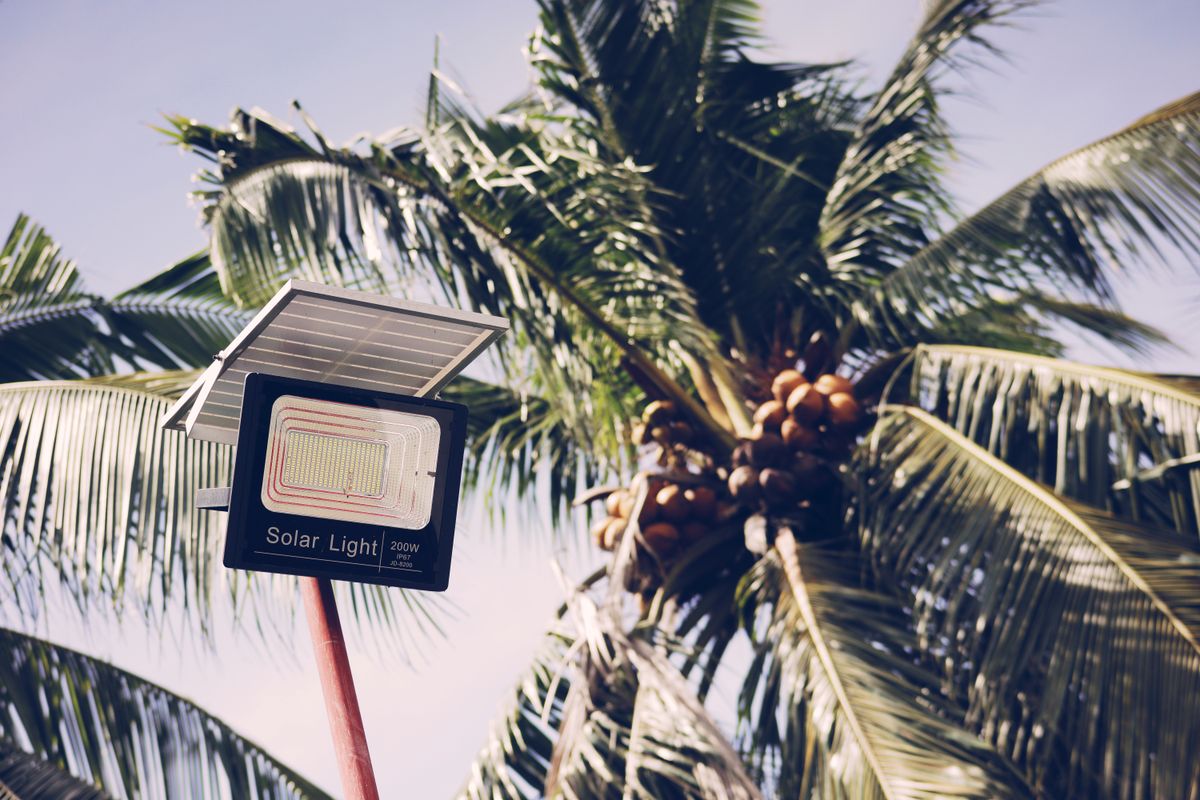
Photo by Nothing Ahead on Pexels
- Inspect the top solar panel glass for micro-scratches, pollen buildup, or resin film.
- Check the perimeter silicone gasket around the solar module for cracking or stiffness.
- Unscrew the battery compartment cover and examine O-rings for dust contamination.
- Inspect nickel-plated battery contact springs for white or green oxidation fuzz.
- Ensure bottom drainage channels on the metal teardrop frame are free of leaves or dirt.
- Verify auto-sensor operation by covering the solar panel fully with your palm in daylight.
Quick-Reference Field Guide: Seasonal Maintenance Overview
- Monthly: Wipe top solar glass with warm water and a soft microfiber cloth; clear perimeter dust.
- Quarterly: Inspect battery door gasket, re-tighten housing screws, and check metal frame drain points.
- Semi-Annually: Apply food-grade silicone grease to rubber O-rings; conduct palm-cover dusk sensor check.
- Annually / As Needed: Replace 1.2V NiMH battery cell when nightly runtime drops below 4 hours after full sun.
Luminous Wisdom: Preserving Silicone O-Ring Seal Integrity
To preserve the IP65 dust-and-water barrier for years, apply a tiny dab of food-grade dielectric silicone grease to the battery compartment O-ring every autumn. Petroleum jelly (like Vaseline) must be avoided, as petroleum breaks down synthetic rubber and silicone elastomers over time, inviting moisture into the sensitive photodiode board.
Diagnosing Fading Glows: Solar Battery & Seal Troubleshooting Matrix
| Symptom | Probable Cause | Diagnostic Threshold | Corrective Action |
| --- | --- | --- | --- |
| Glow lasts under 2 hours after bright day | Depleted NiMH cell or dirty solar glass | Runtime < 20% of normal 10–12 hr capacity | Clean solar glass with microfiber cloth; test cell voltage; replace 1.2V NiMH cell if > 500 cycles old |
| Flickering drops out or light won't switch on | Oxidized battery contacts or corroded switch | Visible white/green film on spring terminal | Gently burnish contacts with a pencil eraser or fine 400-grit sandpaper; apply electrical contact cleaner |
| Visible condensation inside lens housing | Misaligned O-ring gasket or loose housing screw | Moisture droplets forming on inner plastic cover | Open casing, dry thoroughly with soft rag, re-align silicone gasket, apply silicone grease, tighten screws evenly |
| Lantern remains illuminated during daytime | Covered or soiled photodiode sensor | Ambient light > 100 lux but sensor triggers 'On' | Wipe top panel bezel clean; ensure hanging branch or wall shadow is not blocking optical light sensor |
If your teardrop lantern's soft evening glow begins to falter, use this diagnostic guide to pinpoint the cause and restore its flickering charm.
Four-Season IP65 Solar Lantern Maintenance Blueprint
- Spring Awakening (March - May) — Wash away winter road salt spray and sticky spring pollen from glass. Inspect internal battery compartment for moisture after heavy seasonal rains.
- Summer Dusk Optimization (June - August) — Trim back fast-growing foliage or overhanging tree branches that cast shadows on solar collectors during prime daylight hours (10 AM - 4 PM).
- Autumn Leaf & Seal Inspection (September - November) — Clear fallen leaves from metal teardrop scrollwork drainage slots. Coat rubber battery seals with silicone lubricant prior to first frost.
- Winter Freezing Care (December - February) — If living in USDA Hardiness Zones 1-6 (min temp < 14°F / -10°C), unhook light modules and store indoors with fully charged batteries. In mild climates (Zones 7-11), wipe off snow accumulation promptly.
AA NiMH vs. LiFePO4 Solar Battery Performance & Weather Tolerance
| Specification Parameter | Standard 1.2V AA NiMH (Lantern Default) | 3.2V LiFePO4 (High-Output Specialty) |
| --- | --- | --- |
| Nominal Cell Voltage | 1.2 Volts | 3.2 Volts (Incompatible without step-down) |
| Typical Capacity | 600 mAh - 1000 mAh | 400 mAh - 600 mAh |
| Charge Life Expectancy | 500 full charge/discharge cycles | 1,500 - 2,000 cycles |
| Low-Temperature Operating Cutoff | 14°F (-10°C) | -4°F (-20°C) |
| Self-Discharge Rate (per month) | 15% - 20% at room temp | 2% - 3% at room temp |
| Best Usage Scenario | Gentle flickering candle effect, dusk-to-dawn ambiance | High-lumen security spotlights (Overkill for ambient art) |
Understanding your teardrop lantern's internal energy cell helps you optimize charging cycles and select the precise replacement battery when the original cell nears the end of its natural lifespan.
Essential Maintenance Accessories & Replacement Lanterns
To sustain or expand the romantic nightscape across your walkways, outdoor patios, and garden trees, ensure you choose weather-resilient fixtures engineered specifically for multi-season endurance.
Winter Care Decisions: Leave Outside or Store Indoors?
Choose the winterization path that matches your USDA Hardiness Zone to preserve battery chemical integrity and prevent frost expansion damage to IP65 silicone seals.
Best choice for
- Year-Round Outdoor Suspension — IP65 teardrop metal housing effortlessly defends against rain, dew, and light frost while winter sun hours remain adequate for 6–8 hours of candle glow.
- Winter Indoor Solarium or Storage — Sub-zero cold permanently slows chemical ion transfer in NiMH cells, reducing energy retention and risking internal liquid expansion against seals.
- Leaving lanterns outdoors buried under deep snow banks where light cannot reach the photovoltaic panel.
- Storing lanterns in dark basements for over 6 months without fully charging the battery first.
- Indoor Sunroom Nightlight — Place solar teardrop units on a south-facing interior windowsill during winter months so they charge by day and provide soft indoor glow by night.
Technical Spec Matrix: IP65 Sealing & Battery Thresholds
Photo by 🇻🇳🇻🇳Nguyễn Tiến Thịnh 🇻🇳🇻🇳 on Pexels
| Engineering Parameter | Technical Specification | Maintenance Standard |
| --- | --- | --- |
| Ingress Protection Rating | IP65 (Dust-tight + Jet-water resistant) | Rinse with garden hose low spray; do not pressure wash or submerge |
| Solar Panel Type | Polycrystalline Monomodule | Wipe clean every 30 days with damp soft cloth |
| Battery Chemistry & Size | 1.2V AA Rechargeable NiMH (800–1000 mAh) | Replace cell after ~500 cycles (approx. 18–24 months) |
| Optimal Direct Sun Charging Time | 8 to 10 Hours | Position away from tree branch shade and overhang eaves |
| Nightly Illumination Duration | 10 to 12 Hours (Full Charge) | Decreases proportionally on overcast or shortened winter days |
| Operating Temperature Range | 14°F to 122°F (-10°C to 50°C) | Protect from extreme sub-zero polar freezes and direct grill heat |
Here are the precise operational parameters, weather tolerance limits, and battery specifications for standard teardrop solar lanterns.
5 Care Missteps That Dim Your Lantern's Enchantment
Avoid these common maintenance errors to keep your outdoor spaces glowing without interruption:
Photovoltaic Panel & Battery Degradation Timeline (Years 1 to 5)
- Year 1 (0 – 365 Days) — Peak Performance: 100% solar conversion capability. Nightly candle flicker glow lasts 10–12 hours. Maintain simple 30-day panel cleaning.
- Year 2 (366 – 730 Days) — Normal Cell Aging: NiMH battery retention drops to ~80% (~8 hours nightly runtime). Inspect rubber seals and consider installing a fresh 1.2V NiMH cell.
- Year 3 (731 – 1095 Days) — Battery Replacement Window: Rechargeable battery reaches ~500 cycle limit. Swap in a new AA NiMH cell to instantly recover 10+ hour runtime performance.
- Year 4 (1096 – 1460 Days) — Frame & Seal Care: Photovoltaic panel glass efficiency sits at ~90%. Re-grease silicone O-ring seals and wipe down coated metal frame with protective paste wax.
- Year 5 (1461+ Days) — Long-Term Radiance: With routine battery replacements and annual seal greasing, the durable metal frame and IP65 top housing continue illuminating your garden paths smoothly.
Frequently Asked Questions About Solar Lantern Weatherproofing
Here are answers to common questions about keeping solar water drop lanterns protected, charged, and radiant in all outdoor environments.
Sustaining Your Evening Sanctuary: Immediate Action Steps
Your decision: Determine your winter storage strategy based on your USDA Hardiness Zone, and check if your current solar batteries have exceeded 500 charge cycles.
Do this next: Perform a quick 10-minute seal inspection and wipe top photovoltaic panels clean with a damp microfiber cloth today.
- Read next: How to Troubleshoot and Care for Solar Lanterns in Rain and Snow
- Read next: Crafting a Four-Season Sanctuary: The Ultimate Guide to Weatherproof Solar Garden Lights
Solar Water Drop Lantern (Pack Size) for creating a balanced, glowing pathway sanctuary.
Creating a magical outdoor living space is an ongoing joy. Take these simple steps today to preserve your solar teardrop lanterns or add new flickering light highlights throughout your landscape.
Further Reading for Your Enchanted Garden
Provide navigational links to related cluster guides.
Cover photo by Artūras Kokorevas on Pexels.