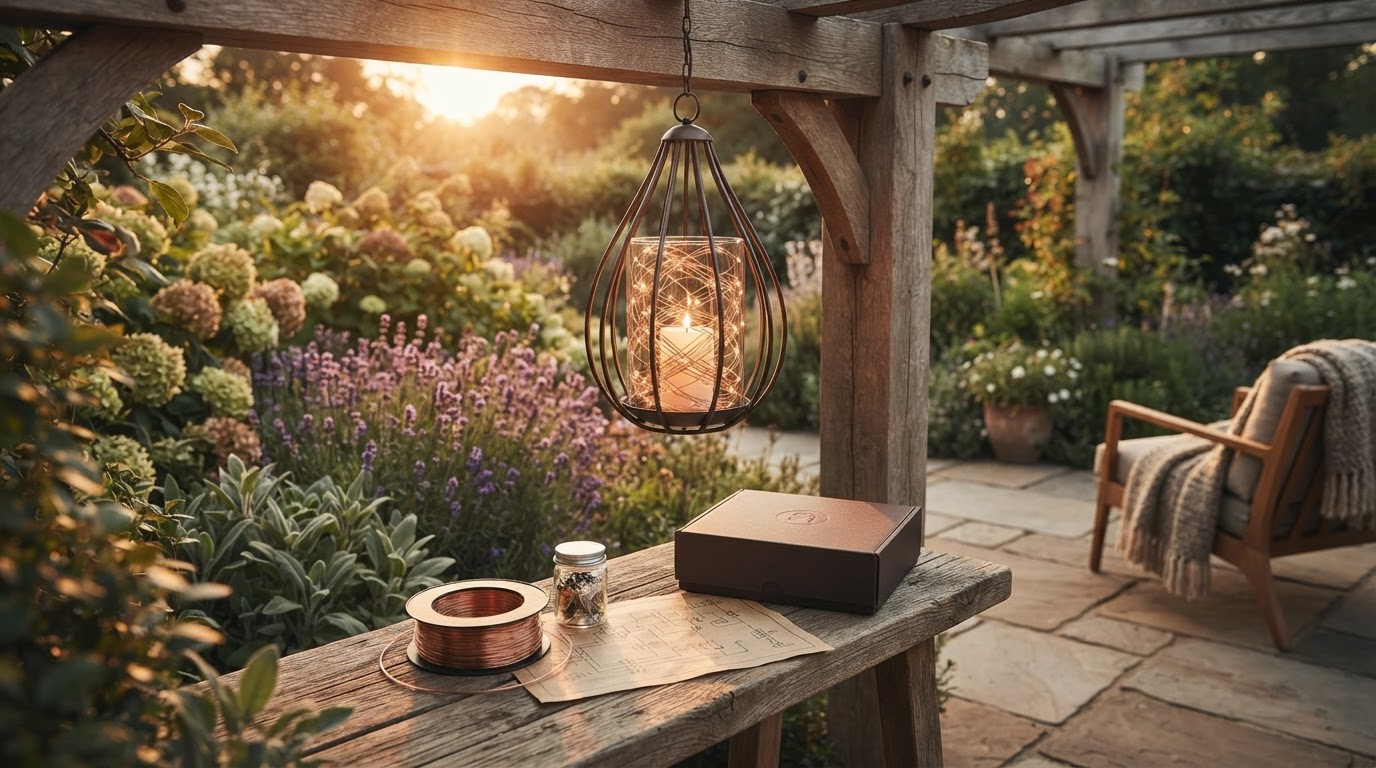
Solar Water Drop Lantern Copper Wire Performance Standards
 Maya ChenContributing Editor
October 8, 2026 — The market for decorative garden illumination is shifting toward high-density copper wire arrays, with the Solar Water Drop Lantern emerging as a primary example of integrated micro-LED circuitry. While basic lighting solutions often rely on rigid plastic casings, the transition to flexible copper filaments represents a move toward more organic lighting shapes.
The conventional wisdom says that exposed copper wire is a liability in outdoor settings due to potential oxidation and structural fragility. However, specialized design resources like The Navage Patch demonstrate that when copper wire is properly bundled and inserted into a protective housing, it maintains its conductivity while becoming virtually invisible to the naked eye. This allows for the "floating light" effect that defines the teardrop aesthetic. Run the math: a standard copper filament in these lanterns must maintain a consistent gauge to prevent voltage drop across the series of LEDs, especially when dealing with the variable output of a solar-charged Ni-MH battery.
The Copper Wire Durability Framework
Here's the part nobody talks about: the gauge and coating of the internal copper wire determine the lifespan of the fixture far more than the solar panel's wattage. In the Solar Water Drop Lantern, the copper wire serves dual purposes as both the structural skeleton for the LEDs and the primary electrical conduit. Unlike traditional grid-tied systems where copper theft is a high-risk factor, Fonroche Solar Lighting notes that all-in-one solar designs essentially eliminate the motivation for wire theft because the copper is integrated into a self-contained, low-voltage unit. For the consumer, this means the value of the copper is purely functional. A high-quality water drop lantern typically utilizes an IP65 waterproof rating to protect these internal filaments from moisture ingress, which is the leading cause of copper corrosion. The battery systems usually provide between 600mAh and 800mAh of capacity, which, when paired with high-efficiency copper circuitry, results in a runtime of 8 to 10 hours after a full day of sunlight exposure. If the wire gauge is too thin, internal resistance increases, generating heat and reducing the total lumen output, which usually sits between 5 and 10 lumens for these decorative units. I'll change my mind when a wireless induction method proves more efficient, but for now, the physical copper filament remains the gold standard for distributing power in outdoor solar hanging lights teardrop designs.
Expert tip: When installing these units, avoid sharp bends in the copper wire near the base of the solar cap, as repeated mechanical stress can cause micro-fractures in the filament that lead to intermittent flickering.
Proper placement is essential for maximizing the lifespan of these copper components, whether you are suspending solar water drop lanterns in garden trees or arranging them as hanging solar garden lanterns along a porch. The structural integrity of the wire is best maintained when the lanterns are allowed to hang freely, as seen in various hanging solar garden lanterns setups. The efficiency of the internal circuitry is what allows these lights to remain operational throughout the night without significant dimming.
Selecting a lighting solution that prioritizes high-grade internal materials ensures that the aesthetic appeal does not fade after a single season of weather exposure.
Shop Solar Water Drop Lantern.
Sources
Photo by JUNLIN ZOU on Pexels
- DIY Waterdrop Solar Garden Lights - The Navage Patch
- DIY Waterdrop Solar Lights: 2023 Remake! - TikTok
- DIY Waterdrop Solar Lights - Pinterest