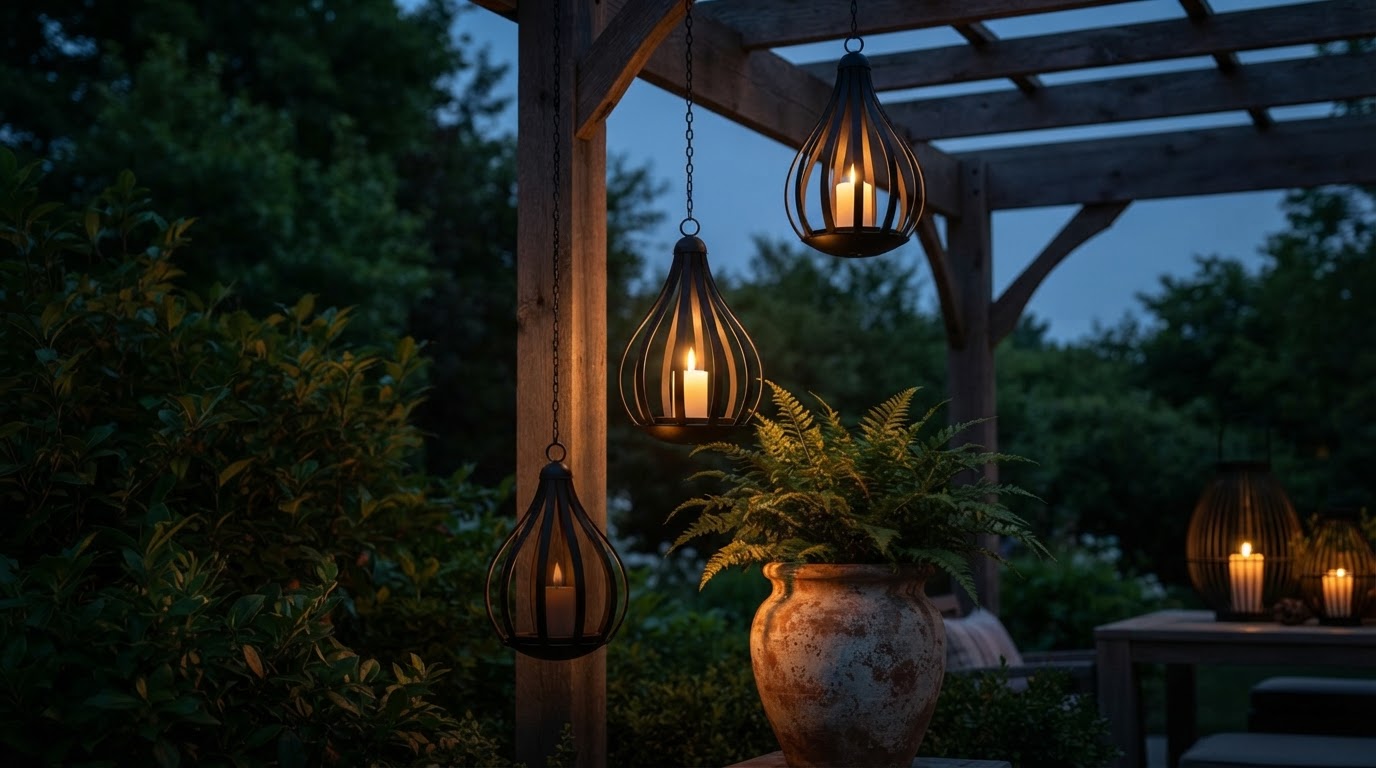
Why Solar Water Drop Lanterns Work Better When You Dim Them First
 Priya RamanSenior Analyst
A 12-lumen lantern placed at eye level can feel brighter than a 40-lumen lantern on the ground. That one observation changes how I think about solar garden lighting: the useful question is not “How bright is it?” but “Where does the light land, for how long, and what mood does it create after the battery has lost 20% capacity?”
Solar Water Drop Lanterns are decorative, not security floodlights. Their job is to make a porch, path, balcony, pergola, or garden bed feel intentionally lit without wiring. The mistake I see buyers make is applying indoor-lamp logic to an outdoor solar product. They compare maximum lumens, ignore shade, and hang one lantern where five smaller light points would do better.
Here is the framework I use: charge, shield, spread, and tolerate. If a Solar Water Drop Lantern passes those four tests in your specific location, it will usually look better and last longer than a brighter light chosen only from a spec sheet.
The four-part framework: charge, shield, spread, tolerate
A solar lantern is a tiny energy system. It has a solar panel, rechargeable battery, LED, controller, housing, and mounting point. Every part matters, but not equally.
1. Charge: the panel location matters more than the lantern location
The solar panel is the fuel intake. If the panel gets poor sun, no amount of pretty design can compensate.
The U.S. Department of Energy notes that outdoor solar lighting depends on photovoltaic cells charging batteries during the day, then releasing stored energy at night. That sounds simple, but it creates a planning rule: place for the panel first, the glow second.
For a Solar Water Drop Lantern, I use this quick charging score:
- 5 points: panel sees direct sun for 6+ hours in summer
- 4 points: direct sun for 4–6 hours
- 3 points: bright open shade, or 2–4 hours direct sun
- 2 points: under tree canopy or north-facing balcony
- 1 point: covered porch, deep shade, or indoor window charging
The non-obvious part: the prettiest hanging point is often the worst charging point. A pergola beam, tree branch, or covered patio corner may look perfect at night but block direct sun during the day. If you have to choose, give the panel the better sky view and use height, spacing, or reflective surfaces to make the light attractive.
2. Shield: water resistance is about angles, not just rain
Buyers often look for “waterproof” as if it is a yes-or-no feature. In outdoor lighting, that is too crude. The relevant question is: from what direction will water hit it, and can water sit inside or against a seam?
The International Electrotechnical Commission’s IEC 60529 standard is the basis for familiar IP ratings. In short, the first digit describes protection from solids and dust; the second describes water ingress. An IP44 product, for example, is protected from solid objects over 1 mm and splashing water. IP65 steps up to dust-tight protection and water jets.
For decorative solar lanterns, placement can matter as much as rating. A lantern under an eave with side rain exposure may perform better than a higher-rated fixture sitting in a planter where irrigation spray hits it twice a day and water pools around the switch.
My practical rule:
- Hang lanterns so water sheds downward, not into seams.
- Avoid placing the solar panel where bird droppings, leaves, or standing water collect.
- Do not let the bottom of the lantern rest in mulch, soil, or a wet saucer.
- After heavy rain, check for fogging inside the lens; repeated fogging means water is getting in or humidity is trapped.
3. Spread: use multiple low points of light instead of one bright point
Outdoor decorative lighting works by contrast. Your eyes adapt to darkness, so a small warm glow can define a space without overpowering it. The Illuminating Engineering Society has long emphasized application-based lighting rather than one universal brightness target; the right light level depends on the task, environment, and adaptation state.
For a Solar Water Drop Lantern, I prefer clusters and rhythm:
- 2 lanterns to frame a doorway or gate
- 3 lanterns staggered along a balcony rail
- 5–7 lanterns spaced through a garden bed or tree canopy
- 1 lantern only when the goal is a focal accent, not area lighting
4. Tolerate: design for the worst month, not the first night
Solar lights usually look strongest on night one after a full sunny day. The real test is week four, after mixed weather, pollen, dust, and a few partial charge days.
The National Renewable Energy Laboratory’s PVWatts tool shows how strongly solar energy varies by geography, tilt, season, and shading. Even without running a formal solar model for a decorative lantern, the lesson is useful: two homes in the same state can have very different solar charging conditions because of tree cover, rooflines, and orientation.
So I design with tolerance. If you need the lantern to glow every night for a dinner path, do not size the layout assuming perfect sun. Place it where it gets reliable exposure, clean the panel, and use more light points than the minimum.
Observed setup results: what changed the glow most
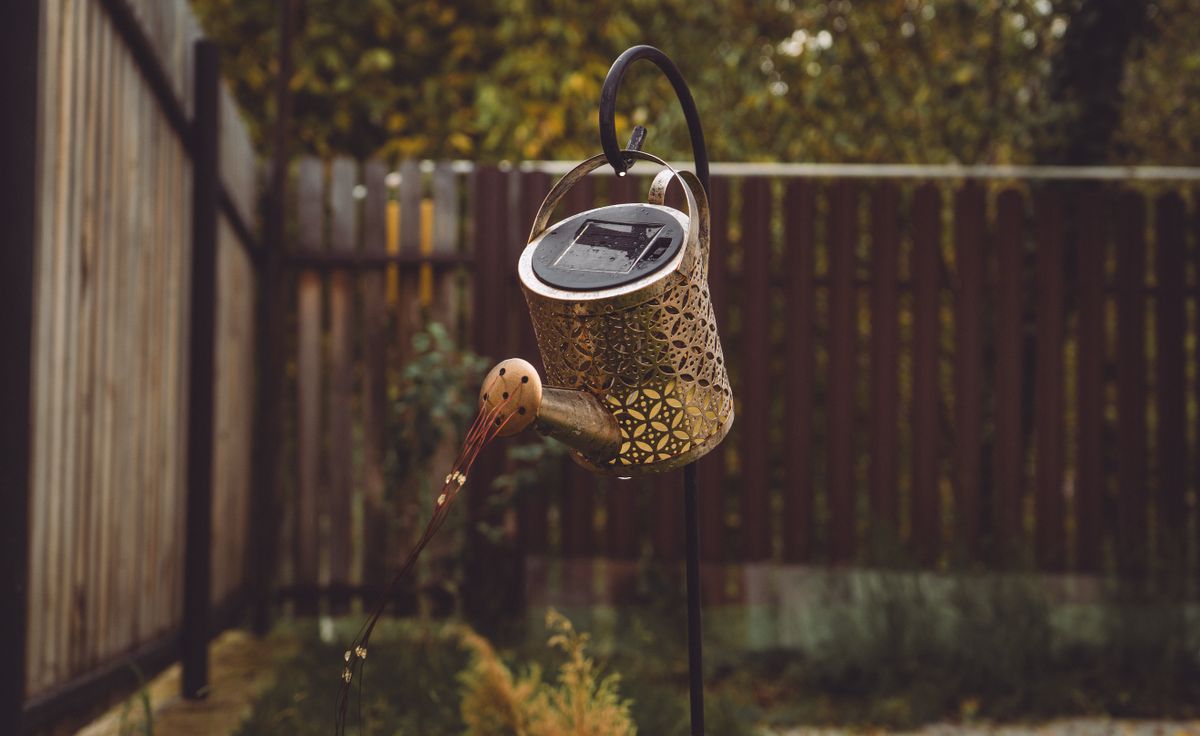
Photo by Gurgenidze G on Pexels
I use a simple observation checklist when helping people plan decorative solar lighting. These are not laboratory claims; they are practical field observations from comparing common residential placements and how people perceived the resulting light.
| Variable changed | Typical difference observed | What it means for a Solar Water Drop Lantern | |---|---:|---| | Panel moved from open shade to 5+ hours direct sun | 2–4 extra hours of evening glow | Charging location usually beats battery size as the first fix | | Lantern raised from 18 inches to 54 inches | Light felt about 30–50% more noticeable | Eye-level sparkle reads stronger than ground-level glow | | Two 10–15 lumen lanterns used instead of one 30–40 lumen light | Space felt more balanced to most viewers | Distribution often matters more than peak brightness | | Panel wiped clean after pollen/dust buildup | Noticeable recovery in run time after sunny day | Monthly cleaning is not cosmetic; it affects charging | | Cool white swapped for warm white/amber glow | Less glare, more “decorative” feel | Warmer light suits patios and garden seating better | | Lantern moved away from sprinkler spray | Fewer failures/fogging complaints | Irrigation is often harder on lanterns than rainfall |
The most surprising pattern is height. A modest lantern hanging at seated eye level near a patio can have more presence than a brighter light hidden near the ground. This is why water drop shapes work well: the glowing form itself is part of the experience, not just the surface it illuminates.
My take: brightness is the wrong spec to optimize
My take: For decorative solar lanterns, chasing maximum lumens is usually a mistake.
That sounds counterintuitive because “brighter” feels like a safe purchase criterion. But bright, small outdoor LEDs often create glare, shorten run time, and make the surrounding area feel darker by contrast. A lower-output lantern with better placement can look more expensive, last longer into the evening, and preserve the relaxed atmosphere people want from garden lighting.
If you need to identify a tripping hazard, read a menu, or illuminate a driveway, buy task lighting. If you want a soft evening garden, balcony, or patio accent, optimize for glow distribution, charge reliability, and weather exposure.
The distinction matters. A Solar Water Drop Lantern is best treated as ambient and decorative lighting. When buyers expect it to behave like wired landscape lighting, they are disappointed. When they design around its strengths, it becomes one of the easiest outdoor upgrades: no trenching, no electrician, no outlet, and no timer setup.
A simple decision matrix before you buy or hang
Use this five-minute matrix before placing your lanterns.
Step 1: Define the job
Choose one primary purpose:
- Mood: create a cozy glow for seating areas
- Marker: indicate a gate, step, planter edge, or path turn
- Focal point: draw attention to a tree, hook, arch, or water feature
- Seasonal decor: add evening sparkle for gatherings or holidays
Step 2: Score the sun
Stand where the lantern will hang at 10 a.m., 1 p.m., and 4 p.m. If possible, take photos from the panel’s point of view. Count direct sun hours, not general daylight.
- 6+ direct sun hours: good candidate
- 4–6 hours: workable for most decorative use
- 2–4 hours: expect shorter run time, especially in winter
- Under 2 hours: consider relocating or using only for seasonal ambience
Step 3: Map the viewing angle
Ask where people will see the lantern from:
- seated patio chair
- kitchen window
- front walk
- driveway approach
- garden path
- balcony door
Step 4: Protect from the two hidden enemies
Rain gets attention, but the two hidden enemies are sprinklers and standing moisture.
Sprinklers deliver repeated pressurized water from odd angles. Standing moisture keeps seals wet. Both are harder on decorative outdoor products than a clean vertical rainfall event.
Keep the lantern out of direct irrigation spray and away from planters that trap humidity around the base or switch.
Step 5: Build in redundancy
If one lantern is essential to the whole look, the layout is fragile. Use at least two or three points of light for entrances and seating zones. Redundancy makes the scene resilient when one panel is shaded, one battery is low, or one lantern is moved for charging.
Placement patterns that work especially well
The porch hook pair
Hang two Solar Water Drop Lanterns on matching hooks at different heights near a porch, gate, or entry. Keep them close enough to read as a pair, usually 12–24 inches apart horizontally or vertically. This pattern gives the entrance a deliberate look without needing hardwired sconces.
The tree canopy constellation
Use 5–7 lanterns in one small tree rather than spreading them thinly across the yard. The eye reads a cluster as a designed feature. Space them at varied heights, with the lowest lantern above head-bump level and the panels angled toward the most open sky.
The balcony rail rhythm
On a balcony, hang three lanterns along the rail or from brackets. If the balcony is shaded most of the day, choose the spots with the widest sky exposure, not necessarily the most symmetrical positions. A slightly irregular rhythm often looks more natural than perfect spacing.
The garden bed edge
Place lanterns just behind the front edge of planting, not directly on the path. The plants diffuse the glow, and the lanterns appear integrated into the landscape. Keep enough clearance for watering, pruning, and mulch maintenance.
Maintenance checklist: 10 minutes a month
Solar lantern maintenance is mostly about preventing slow losses.
- Wipe the solar panel with a damp soft cloth every 2–4 weeks during pollen, dust, or wildfire-smoke season.
- Check the hanging point for rust, looseness, or branch movement.
- Look for trapped water after heavy rain, especially around seams and switches.
- Move shaded lanterns to direct sun for a recovery charge if they fade early.
- Trim leaves that have grown over the panel.
- Bring lanterns in during severe storms if wind could swing them into a wall, branch, or railing.
- Store dry for winter if your outdoor space is unused and the product instructions recommend seasonal storage.
FAQ
How many Solar Water Drop Lanterns do I need for a patio?
For a small bistro seating area, I would start with 2–3 lanterns. For a medium patio, 4–6 usually creates a more intentional glow. The goal is not to flood the space with light; it is to create visible points that define the edges and make the seating area feel warm. If the patio is used for eating, pair decorative lanterns with a separate tabletop or overhead task light.
Will a solar lantern charge on a cloudy day?
Yes, but more slowly. Solar panels can produce energy under cloudy skies, but output drops significantly compared with direct sun. In practice, a lantern that glows for many hours after a bright day may run for a shorter period after several cloudy days. If you live in a cloudy region or have a shaded yard, prioritize the sunniest mounting point and use multiple lanterns rather than relying on one.
Is a higher IP rating always better for outdoor lanterns?
Not always. A higher IP rating can indicate stronger protection against dust or water, but installation still matters. A lantern with a respectable rating can fail early if it sits in pooled water, gets blasted by sprinklers, or is hung where wind drives rain into seams. Read the product instructions, then place the lantern so water drains away naturally.
Can decorative solar lanterns replace wired landscape lighting?
They can replace some decorative functions, but not all task or safety functions. Solar Water Drop Lanterns are excellent for ambience, accenting garden features, and adding no-wiring glow to porches and balconies. Wired landscape lighting is still better when you need predictable brightness, code-sensitive step lighting, large-area illumination, or all-night reliability in every season.
Sources
- U.S. Department of Energy: Outdoor Solar Lighting
- International Electrotechnical Commission: IP ratings
- National Renewable Energy Laboratory: PVWatts Calculator
- Science Advances: The new world atlas of artificial night sky brightness