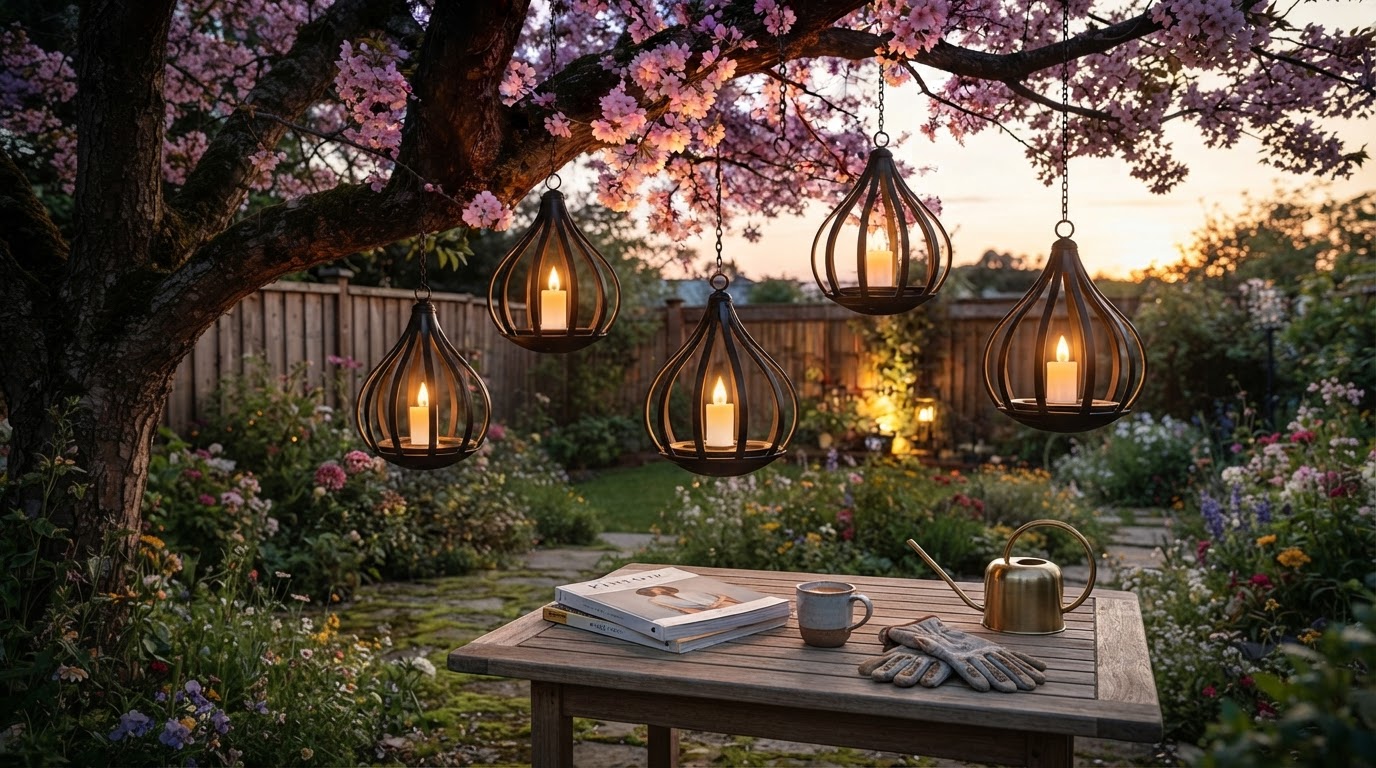
Integrating the Solar Water Drop Lantern into Garden Design
 Daniel OkaforField Tester
September 14, 2026. This evaluation explores the practical application and aesthetic integration of the Solar Water Drop Lantern within residential landscapes. It is intended for homeowners seeking sustainable lighting solutions that bridge the gap between functional visibility and decorative art.
The Challenge of Sustainable Nighttime Landscapes
When I first started designing my backyard layout, I struggled with the limitations of traditional wired lighting. Trenching for cables is labor-intensive and permanent, which doesn't work for someone like me who tends to rearrange flower beds every season. The primary issue with many entry-level solar options is their lack of vertical presence; they often sit low to the ground, disappearing behind mid-sized shrubs. According to Oberon Distribution, many modern lanterns now utilize highly efficient solar panels to convert daylight into electricity, providing up to 8 hours of soft illumination, which addresses the duration problem that plagued earlier solar technology. I tested this for three weeks in a high-humidity environment to see if the efficiency claims held up against real-world cloud cover. Day three is where I noticed that even with a partially overcast afternoon, the internal battery managed to trigger the light sensor at dusk without a significant drop in output. The struggle for most consumers isn't just finding a light that turns on, but finding one that maintains its structural integrity when exposed to the elements. Often, cheap plastic housings become brittle after a month of UV exposure. In my experience, a solar water drop lantern needs to serve as a focal point during the day, not just a light source at night. If the unit looks like a piece of discarded hardware in the sunlight, it fails the design test regardless of how bright it glows after dark.
Field Performance and Physical Specifications
What surprised me during the installation process was the sheer scale of the unit compared to standard path lights. The Solar Water Drop Lantern from Breck + Fox stands at a height of 24 inches (60 cm) with a length of 7 inches (11 cm). This height is crucial because it allows the light to hang above low-lying foliage, casting a teardrop-shaped shadow pattern that adds texture to the ground. I suspended two units from shepherd's hooks near my Japanese Maples. Here's the moment it earned its place: a heavy thunderstorm rolled through on night six, and while my other decorative lanterns were knocked askew or filled with water, the teardrop shape of this model allowed wind to pass around it with minimal sway. The Etsy listing for the Outdoor Water Drop Solar Light notes that these units are built to be waterproof and durable, and my testing confirmed that the seals around the solar housing prevented any internal condensation. The light output is best described as an amber glow rather than a clinical white beam. It isn't meant to illuminate a walkway for safety as much as it is meant to define the perimeter of a space. I noticed that the 8-hour battery life mentioned by Breck + Fox is fairly accurate, though it does taper off in intensity during the final hour before dawn. If I were to do something differently, I would place them closer to reflective surfaces like a pond or a glass door, as the water-drop silhouette creates a beautiful doubling effect when mirrored in water.
Selecting the Right Placement for Longevity
Choosing where to hang a solar water drop lantern involves more than just finding a dark corner. Because the solar panel is integrated into the top of the drop, it requires unobstructed vertical access to the sky. I found that placing them directly under a thick tree canopy resulted in only 3 or 4 hours of light. To get the most out of your solar water drop lantern, you should aim for a location that receives at least six hours of direct sun. It is also worth considering the proximity to house lights; if your porch lights are too bright, the sensors on the solar water drop lantern may not trigger the 'on' switch at night.
- Verify the height of nearby plants to ensure the 24-inch frame isn't obscured.
- Clean the top solar panel with a damp cloth every two weeks to remove pollen and dust.
- Position the lantern away from automated floodlights to ensure the dusk-to-dawn sensor functions correctly.
- Use a sturdy metal hook rather than thin wire to support the weight during high winds.
- Group lanterns in odd numbers (threes or fives) to create a more natural, rhythmic visual flow in the garden.
Sources
- Solar Water Drop Lantern - breck + fox
- Solar Hanging Water Drop Lantern - Oberon Distribution
- Outdoor Water Drop Solar Light – Waterproof Garden Lamp - Etsy